
Keeping Trucks Wrapped and Revenue-Ready
Pacific Service Center | Portland, Oregon


PSC helps fleet managers keep their vehicles road-ready with expert mechanical, collision, paint, and customization services.
These are not simply trucks or buses — they’re revenue generation machines. Keeping them on the road matters.
Before
- PSC initiated its in-house print production many years ago with Roland DG printers, but its graphics business was surging and it needed additional production power.
After
- The XP-640's wide color gamut allows accurate reproduction of corporate brand colors.
- The XP-640's speed is enabling more efficient graphics production while maintaining PSC's commitment to quality.
Visiting collision service centers is a necessary step in the lifetime of most trucks – and these days, rebranding and advertising campaign wraps are high on the list of services provided. Dan Reichenbach has owned Pacific Service Center in Portland, Oregon, since 2007. Early on, he recognized that bringing wrap graphics work in-house would improve quality and substantially decrease turnaround time. Pacific Service Center invested in digital printers in 2008, and today operates four large-format printers, including two Roland DG TrueVis XP-640 64-inch eco-solvent wide-format printers.
We spoke with Dan about why he chose to bring digital production in-house, how often graphics are changed on these “rolling billboards,” and what’s ahead for speeding “keys to keys” turnaround in his shop.
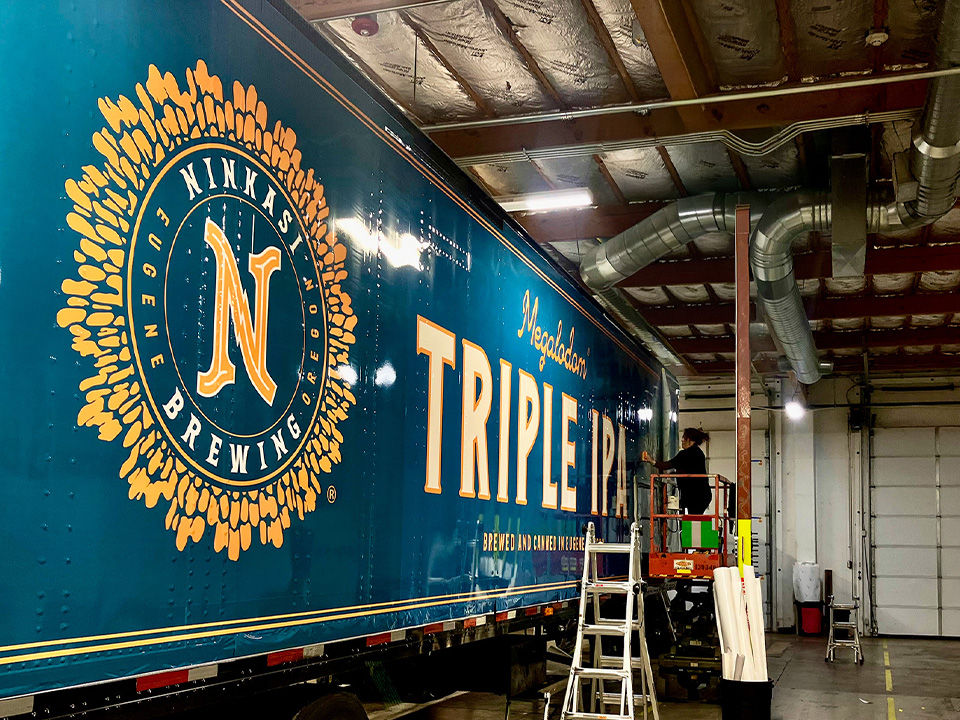
Tell us about your facility – how do you accommodate these large vehicles?
Dan Reichenbach: Pacific Service Center operates out of 100,000 square feet of HVAC-equipped repair space. Our team of 85 employees includes graphic designers and two installation crews — one on-site and one mobile for road projects.
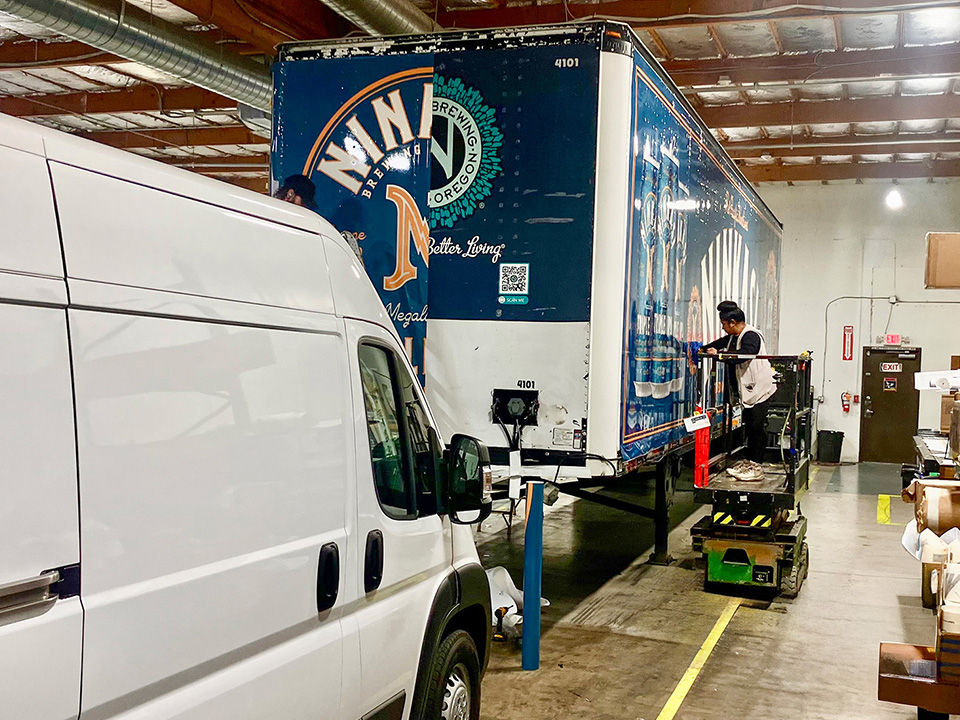
What kinds of vehicles do you service?
We service a wide range of fleets:
- Beverage fleets, including beer and wine distributors.
- Coca-Cola, which sends us graphics to produce and install.
- Print houses in the Midwest, where we handle installations.
- Final mile vans for parcel delivery and others.
- Class 8 over-the-road vehicles, from curtain siders to reefer trailers.
- Student school buses, wrapped for events and promotions.
- Airport shuttle operators who bid for advertising space.
Why did you decide to bring graphics production in-house?
These are not simply trucks or buses — they’re revenue generation machines. Keeping them on the road matters. By eliminating outsourcing and producing/installing graphics ourselves, we cut days off turnaround time. That difference keeps customers profitable. We’ve been producing graphics in-house for 17 years, and many vehicles now come to us solely for graphics updates, not just after repairs.
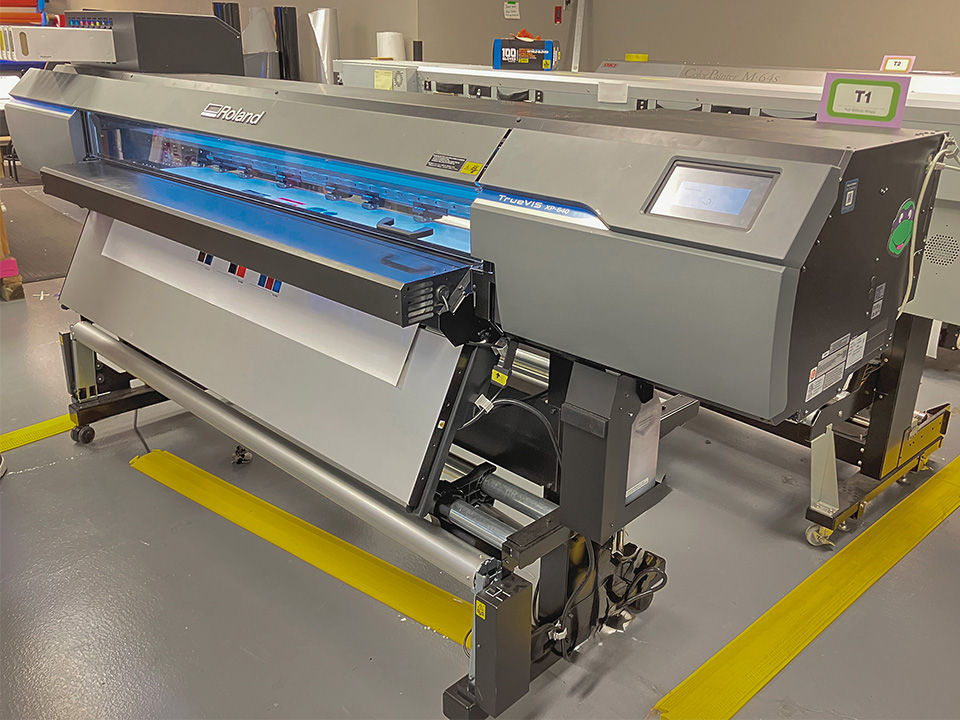
What are some challenges of working on such varied vehicles?
Scale is the biggest challenge. Wrapping a semi-trailer requires 3,000 square feet of space. We print 54” x 102” or 54” x 110” panels, starting installation three feet off the ground — everything must align perfectly. It takes skilled installers. Speed from the XP-640 printers helps us keep up with demand.
Color accuracy is another challenge. For brand clients like Coca-Cola, consistency matters. Their “Coca-Cola red” has to be exact. The XP-640’s expanded color gamut allows us to nail these brand-critical colors every time.
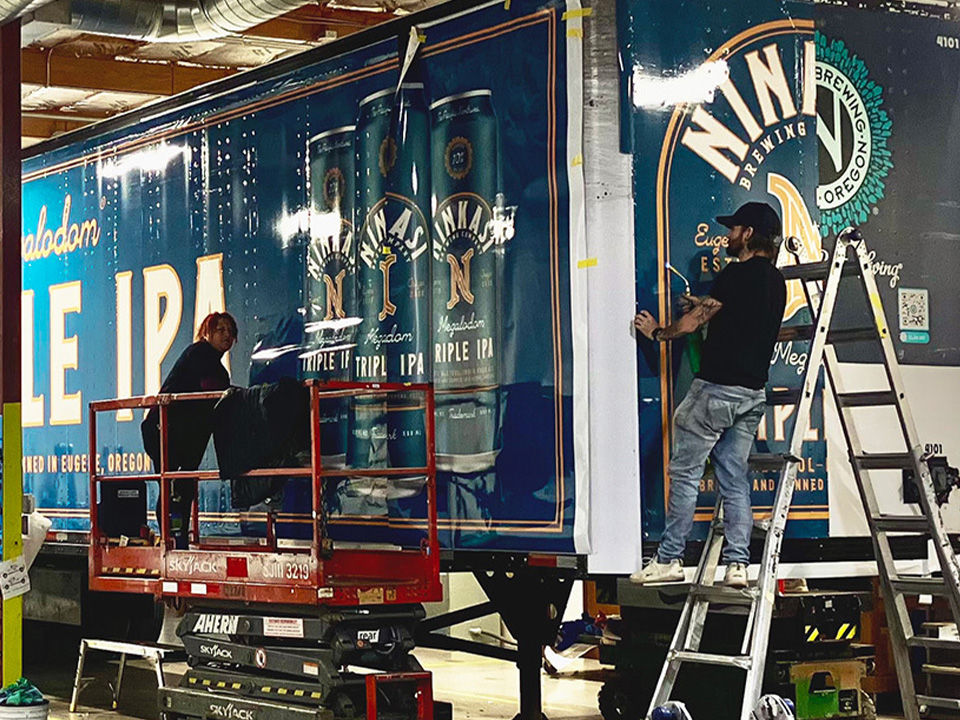
How often are wraps changed out?
It depends. Some wraps, like event promotions, stay on for as little as two weeks. More established brands typically re-wrap every four to six months as part of scheduled campaigns.
What changes have you seen in the industry during your tenure?
One major shift came in the early 2000s when manufacturers began delivering vehicles painted white and ready to wrap. Since wraps can’t adhere properly to powder coat or primer, this change boosted the graphics industry. While painting revenue dropped, our graphics business surged — and it remains one of our strongest divisions today.
What lies ahead for your digitally printed graphics business?
Looking ahead, PSC plans to keep investing in faster printing technology, expand mobile installation capacity, and tighten cycle times. Our goal is to continue setting the pace for fleet graphics in the Pacific Northwest by ensuring customer vehicles spend more time generating revenue on the road and less time in the shop.
