

Pad printing has long been the go-to method for decorating small, oddly shaped, or curved industrial parts — from promotional items to electronic components to medical devices — but digital UV printing is increasingly stepping into territory pad printing once had to itself.
For operations juggling frequent design changes, low minimums, variable data, or full-color and photorealistic graphics, digital UV printing offers a compelling case — and it's a shift worth understanding for anyone weighing where to invest next in decorating capability.
Here's a breakdown of how the two technologies compare, and where each one earns its place on a production floor.
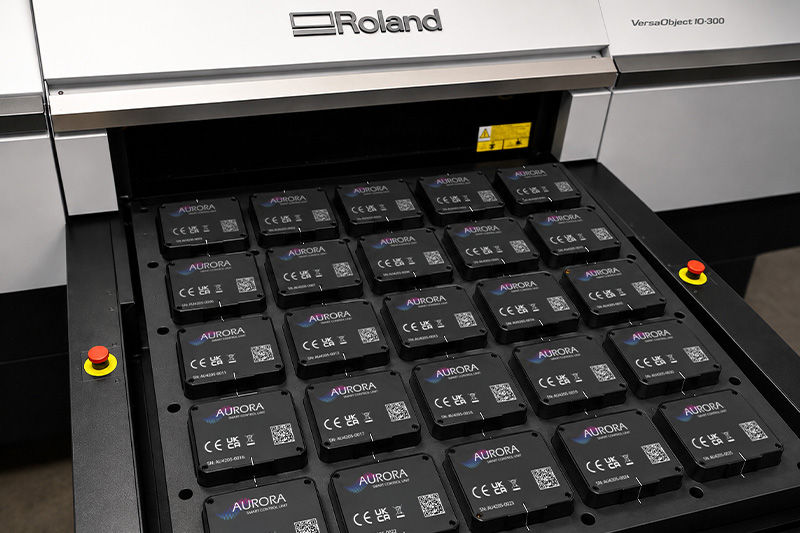
Roland DG's VersaObject IO-300 flatbed UV printer features a moveable bed and fixed gantry.
First, what is the difference between pad printing and digital printing?
Typically, pad printing is used with one-color or two-color printing, and for runs that number in the tens of thousands or more. While the graphics it produces are consistent, it doesn’t provide a photographic range of color options.
Pad printing can be used on a wide range of flexible and rigid substrates due to the high number of ink types available for this process. There are approximately 47 different ink types that can be used in pad printing, and they can be mixed and formulated to adhere well to glass, plastic, and a range of other porous and nonporous materials.
Digital printing offers a wider color gamut on an increasingly wide range of substrates; however, there are fewer types of UV ink available, so some substrates, such as neoprene, yield better results when printed using pad printing. With built-in white and gloss ink, UV digital printing also provides an opportunity to incorporate texture and surface finishes that add a premium effect.
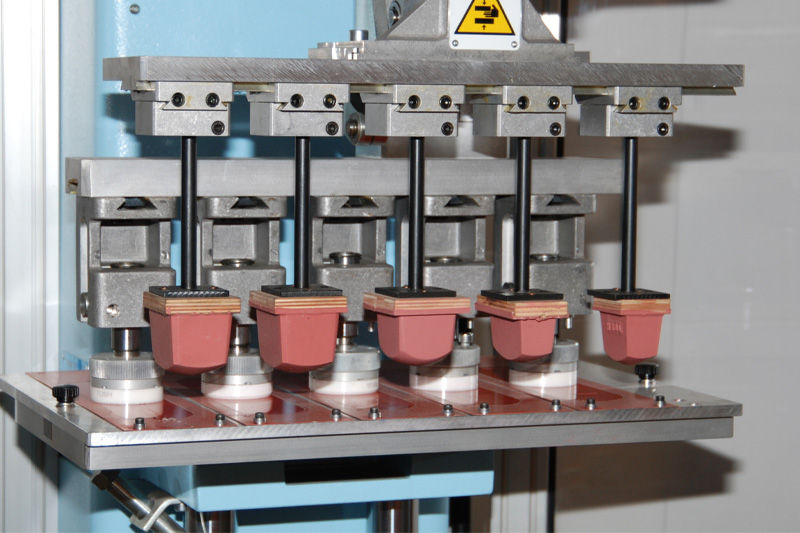
A pad printing machine.
When is pad printing better than digital printing? And when is digital printing better than pad printing?
If you have the option to use either technology, pad printing is the more efficient process when you are printing the same decoration on tens or hundreds of thousands of objects. It is also the better process for certain products that may be difficult for UV ink to adhere to, such as neoprene items.
Digital printing offers advantages when the design involves more complex colors such as the range of hues in a photo, for example. Digital printing also requires much less set up time and is therefore the preferred option for shorter runs and variable data printing applications.
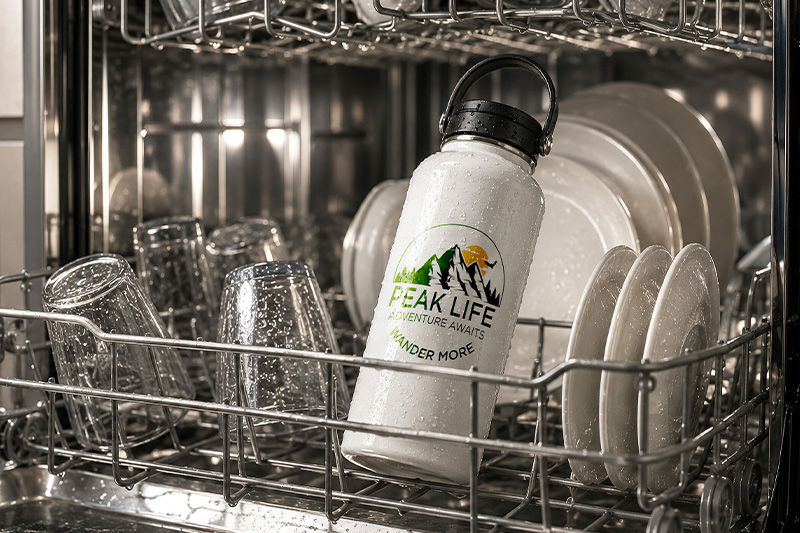
Durability is an important feature in UV-printed graphics.
Does digital printing last as long as pad printing?
Both these technologies provide very good durability; however, pad printing with its wide range of ink types has an advantage in being able to design the best ink chemistry for the substrate.
With several different types of UV ink to choose from, digital print users can select the best option for their substrate. Manufacturers are working to close the gap with pad printing, developing new UV ink options, such as Roland DG’s EUV-H hard ink for industrial applications.
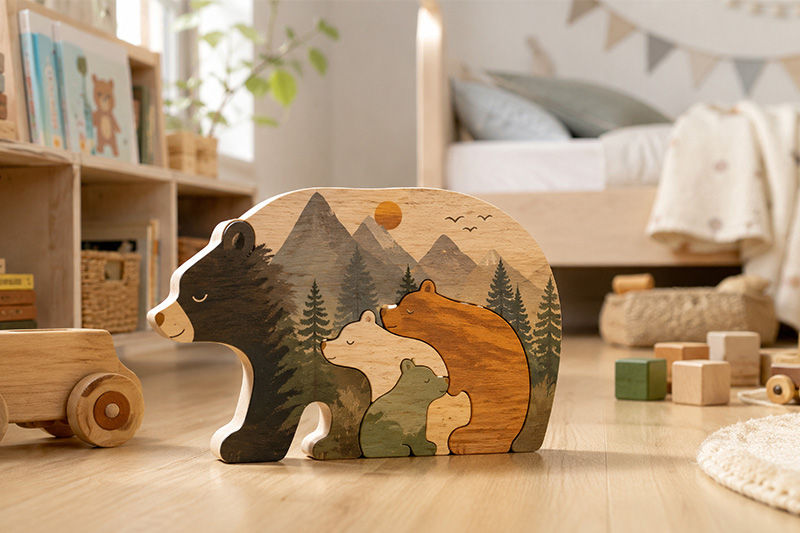
Roland DG offers a range of UV inks, including inks approved for use on toys.
Why would a pad printing shop add digital printing capability?
Adding digital printing offers pad print operators several important advantages for augmenting their current capabilities.
- Photographic quality prints: Digital printing allows shops to go beyond several spot colors to offering a full gamut of color.
- Gloss effects: Adding gloss and texture to prints creates a premium look and feel. Short runs: With quick and easy setup, digital printing offers significant time savings over pad printing for short runs and allows the shop’s pad printing to continue for longer jobs.
- Test prints and prototyping: Digital printing’s advanced software allows easy color and design changes, enabling a run of five or more test prints prior to setting up for pad printing.
- Variable data: Digital printing is designed to easily print variable data, offering additional capabilities for pad printers.
- UV can print on metal and glass: In addition to wood, new UV ink formulations such as EUV-H Hard Ink are capable of printing on metal and glass, providing durable results on a wider range of materials.
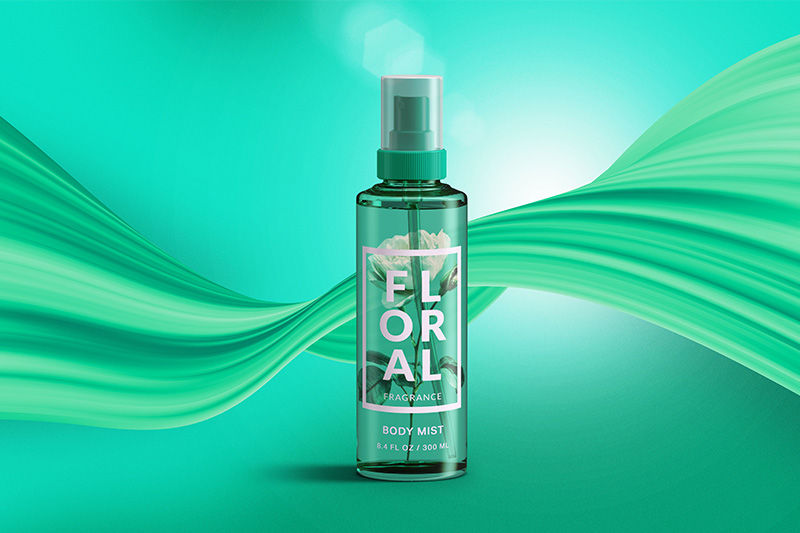
Printing on cylinders and even lightly tapered surfaces is easy with today's helical printers.
Is adding digital printing profitable?
Digital printing is absolutely a profitable technology, either as a standalone offering or as a complementary technology to pad printing. Personalization and customization are increasingly important in the decoration space, and digital printing can easily produce premium, customized designs with full color and assorted texture options.
With this workflow, you can quickly and easily take a product worth $2-$4 and turn it into a personalized product worth $12-$14.
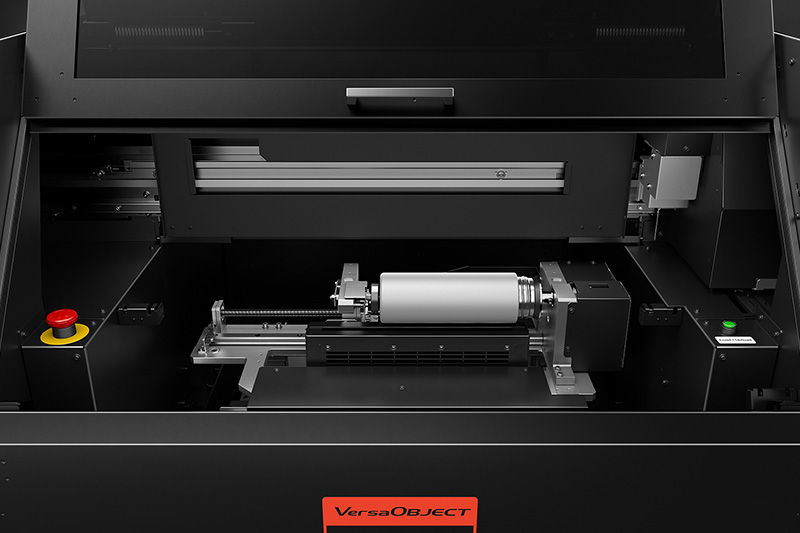
Roland DG's VersaObject RC-300 benchtop helical UV printer.
What UV digital printing options are available for pad print operators?
There are a suite of options available from Roland DG for pad print operators looking to add UV digital printing capability. In addition, advanced software allows one operator to control multiple Roland DG devices remotely, which can produce different projects simultaneously.
The newly-released VersaObject IO-300 flatbed UV printer is designed to work in conjunction with automation. With a moveable bed and fixed gantry, products can be automatically or manually loaded and unloaded as printing continues.
The RC-300 series of helical cylindrical UV printers will also be released this fall, providing direct printing on a wide variety of tubular, cylindrical and even lightly tapered objects as well as on filled or unfilled bottles. The printers’ software allows up to 50 preset print configurations, allowing rapid set up and improved accuracy in print runs.
The VersaObject LO/CO-i series of wide-format UV flatbed printers offers printable widths from 30 inches to 59.8 inches and can customize flat or irregularly shaped objects up to 9.5 inches in height.
Conclusion
In the past few years, the line between the capabilities of pad printing and digital printing in terms of ink adhesion has become blurred as digital printer manufacturers widen the gamut and improve the formulation of the UV inks they provide. UV printers are also increasingly capable of printing on three dimensional and irregular items.
In many cases, adding digital printing to your pad printing operation can increase the range of the decoration you are able to offer, including a wider color gamut and the ability to apply premium finishes, and can provide an excellent option for sampling, variable data and shorter runs.
If you have questions, a Roland DG expert would be happy to help.
Talk to an Expert