

Dr. Julio Cesar Rascon sees a common problem in full-arch dentistry. Clinicians often become focused on how to execute the patient’s case before fully understanding how to plan it. For Rascon, that order needs to be reversed. “A lot of people don’t know how to plan this, or how to start,” he says. That belief has shaped what Rascon calls his Functional Plan, an approach that looks beyond the scan and surgical guide to the factors that ultimately determine the outcome: occlusion, vertical dimension, anterior guidance, esthetics, surgical planning, fabrication, and the individual patient’s needs. It’s a perspective built from seeing the entire workflow himself.
Born and raised in Yuma, Arizona, and trained as a dentist in Mexico City, Rascon completed his residency in Mexicali before building a practice that now spans two locations in Baja California. He also owns and operates his own digital lab and increasingly travels throughout northern Mexico teaching other clinicians. While crown-and-bridge remains an important part of his practice, full-arch dentistry has become a major focus and passion. “That’s what my courses are all about—full arch,” he says.
What makes Dr. Rascon’s perspective unique is his experience on both sides of the workflow. As a clinician and lab owner, he understands how decisions made chairside impact the lab process and, ultimately, the final result of the patient’s case.
Plan Before You Scan
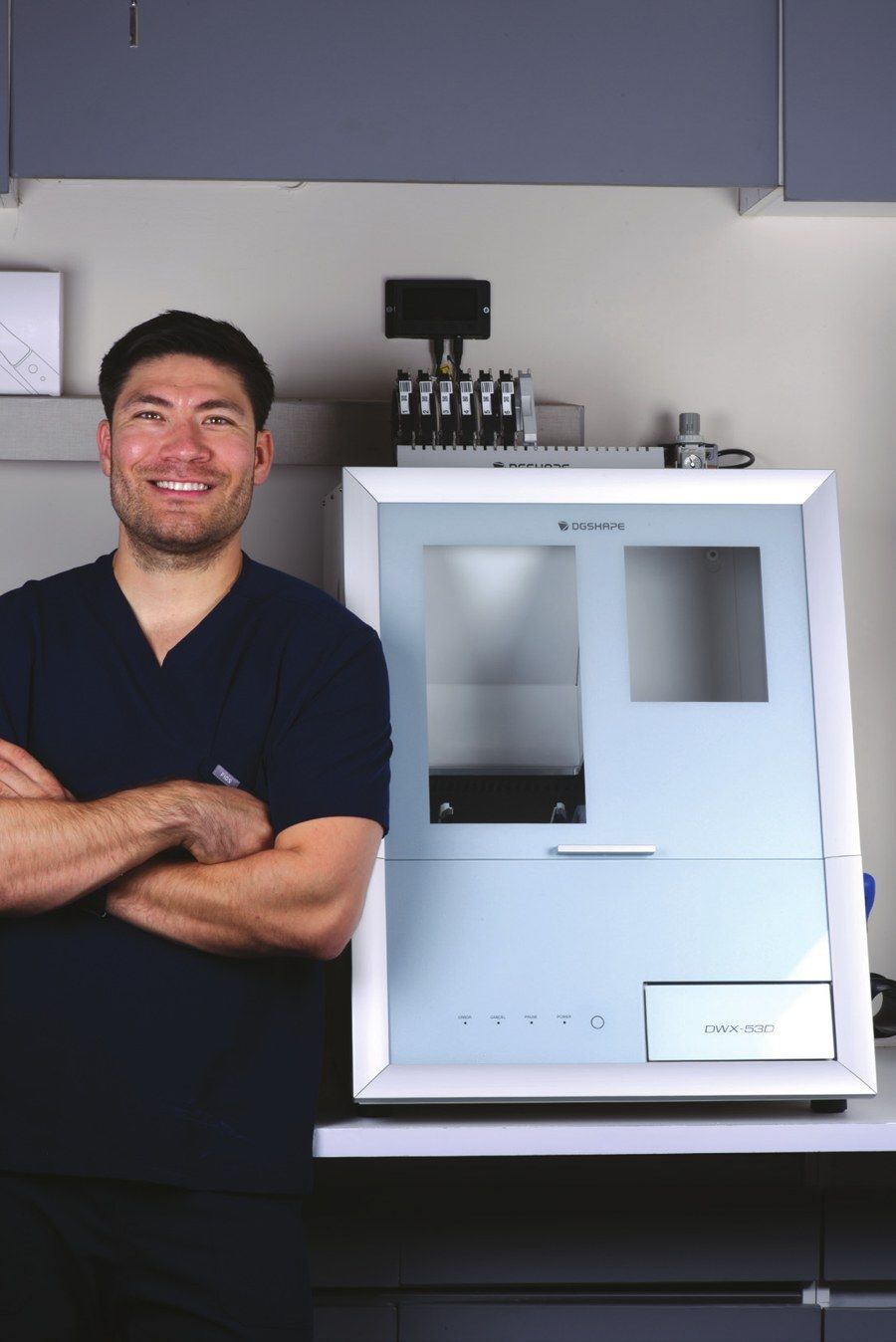
Rascon performs full-arch cases at his own practices and travels monthly to Tecate and Monterrey, Nuevo León, to treat additional patients. That experience has reinforced a principle that now sits at the center of his teaching: predictability begins with planning.
Too often, he says, clinicians approach a full-arch case as an extension of single-unit dentistry: take a scan, fix the bite, design the restoration and move forward. But full-arch restorative treatment requires a much broader view, with many other factors to consider. Occlusion type, vertical dimension, anterior guidance, esthetics, and even patient expectations all need to be addressed and planned before treatment begins.
Rascon loosely groups patients into green, yellow, and red risk categories, encouraging clinicians to recognize the complexity of each case before making promises about the outcome. Vetting patients and understanding their expectations can make or break these complex cases. His message is simple: know what you’re dealing with before you start.
That philosophy is also the foundation of his Full-Arch Digital Experience, an advanced digital implant course that takes clinicians through the complete workflow, including diagnostic planning, scanning protocols, surgical guidance, photogrammetry, and immediate-load delivery.
As Rascon describes it, “it’s the process from A to Z.”
Understanding What Happens After the Operatory
Owning his own dental lab has given Rascon a different perspective on full-arch cases. He sees the entire journey of the case, from the initial planning and treatment to what happens in the lab and ultimately the patient’s final outcome. More importantly, he understands how decisions made at each stage can impact the next.
His goal isn’t to turn clinicians into lab technicians. It is to help them understand what happens next, why it matters, and how the decisions they make early in the process chairside can impact everything that follows. For complex full-arch cases, that understanding is another important part of planning for a predictable outcome.
Rascon uses his experience in the lab to provide clinicians with a better understanding of what happens after a case leaves the operatory. He walks through cases step-by-step, from impression and design through milling, and final delivery. This helps clinicians to see firsthand how the decisions made during treatment planning and chairside impact the lab processes and final outcome of the patient’s case.
While a single crown may move through the restorative workflow quickly, a full-arch restoration can take a week to ten days, with considerably more planning and coordination behind the scenes. Understanding that process gives clinicians a better appreciation for how the decisions made chairside ultimately affect what happens in the lab.
Rascon also sees a larger challenge developing within the industry as traditional laboratory education changes. As digital manufacturing becomes more accessible, he believes understanding dental anatomy, function, and restoration design remains just as important as knowing how to operate the technology. For him, digital tools don’t replace that knowledge. They make it even more important.
Teaching the Entire Workflow
Establishing the importance of the connection between the clinician and lab technician is what makes Rascon’s approach to education stand out.
He is not just simply teaching dentists how to place implants or use a particular piece of technology. He is focused on assisting them to understand how one decision affects the next from diagnosis and scanning through design, restoration fabrication, and final case delivery. It is also why his own experience as a clinician and lab owner matters.
When something doesn’t work, he sees both sides of the problem. And when it does work, he understands what made the outcome predictable. That perspective has helped shape the way he teaches other clinicians and the way he continues to refine his own workflows for his own patients.
Precision You Can Build Around
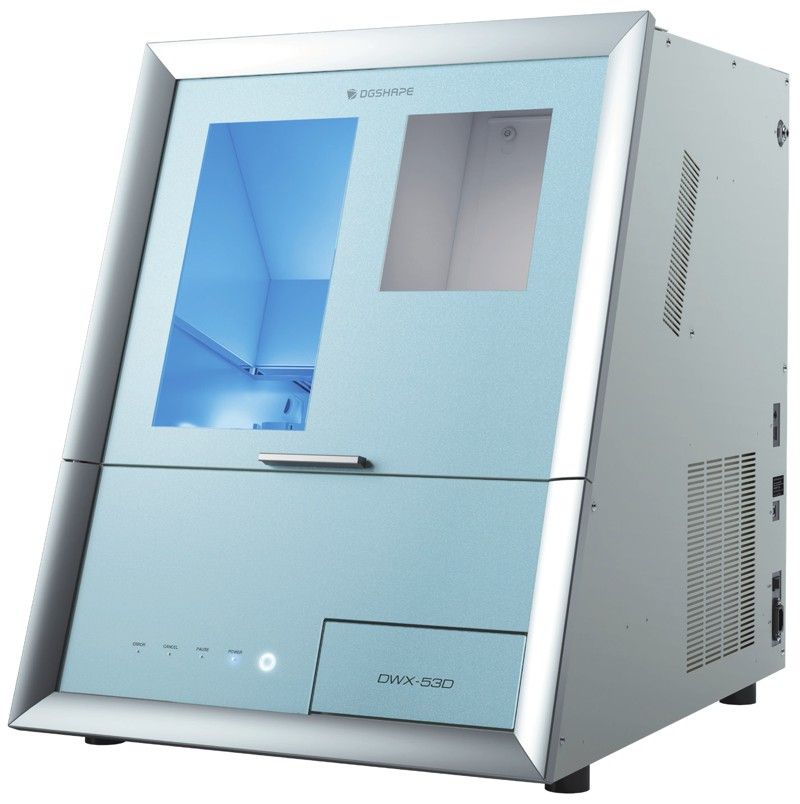
Technology is an important part of that workflow, but for Rascon, the value comes down to predictability and quality.
A longtime user of DGSHAPE DWX milling solutions, Rascon has worked with several generations of the technology over the years. Most recently, he added the DWX-53D to his workflow and has been using it for a little over a year without a single failure. “It has been very reliable, and it is simple to use,” he says.
That reliability becomes particularly important when working with complex restorations where precision needs to carry through the entire process.
For Rascon, the mill is not separate from his planning philosophy, but one key part of the overall digital workflow. The precision and consistency of the milling process help ensure the final restoration reflects what was planned from the start.
He points to the safeguards built into the workflow as another reason he continues to rely on the technology. “The software won’t let you advance into the process until everything is in the correct position,” he says.
For a clinician whose philosophy is built around planning first and executing second, that consistency matters.
From Clinician to Technician to Educator
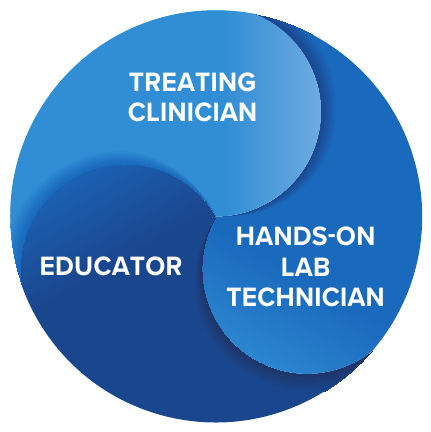
Rascon’s career now sits at the intersection of three roles: treating clinician, hands-on lab technician and educator.
But he doesn’t approach them as three separate disciplines. They are all part of the same case.
From the first scan and treatment plan to manufacturing and final delivery, each step affects what comes next. Understanding those connections is what Rascon believes gives clinicians greater control over their outcomes and it is the lesson he continues to share with the dentists he trains.
For Rascon, digital dentistry is not simply about adding more technology to the workflow. It is about understanding how every part of that workflow matters and works together.
And when it comes to full-arch dentistry, his philosophy remains straightforward:
Predictable outcomes don’t start with treatment.
They start with the plan.
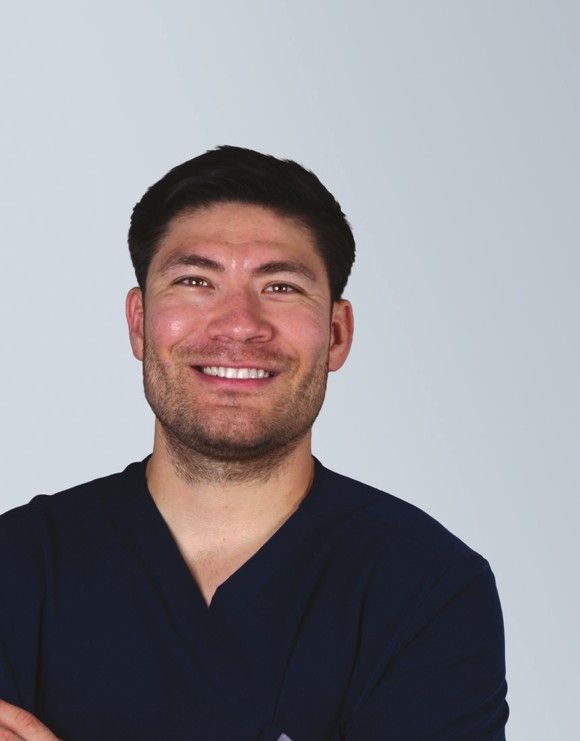
“The DWX-53D has been very reliable, and it is simple to use, the software won’t let you advance into the process until everything is in the correct position.”
Dr. Julio Cesar RasconClinician, Lab Owner & Educator, Baja California